Sunday, 28 September 2014

The Man Behind the Michelin-Starred Hong Zhou Restaurant


It was elite credentials by any standard – to be among the first batch of chefs awarded the country’s highest culinary honor, the National Grade of China; and to be recognized as one of China’s 8 most illustrious chefs. But these were not Chef Wu’s, they were his dad’s.
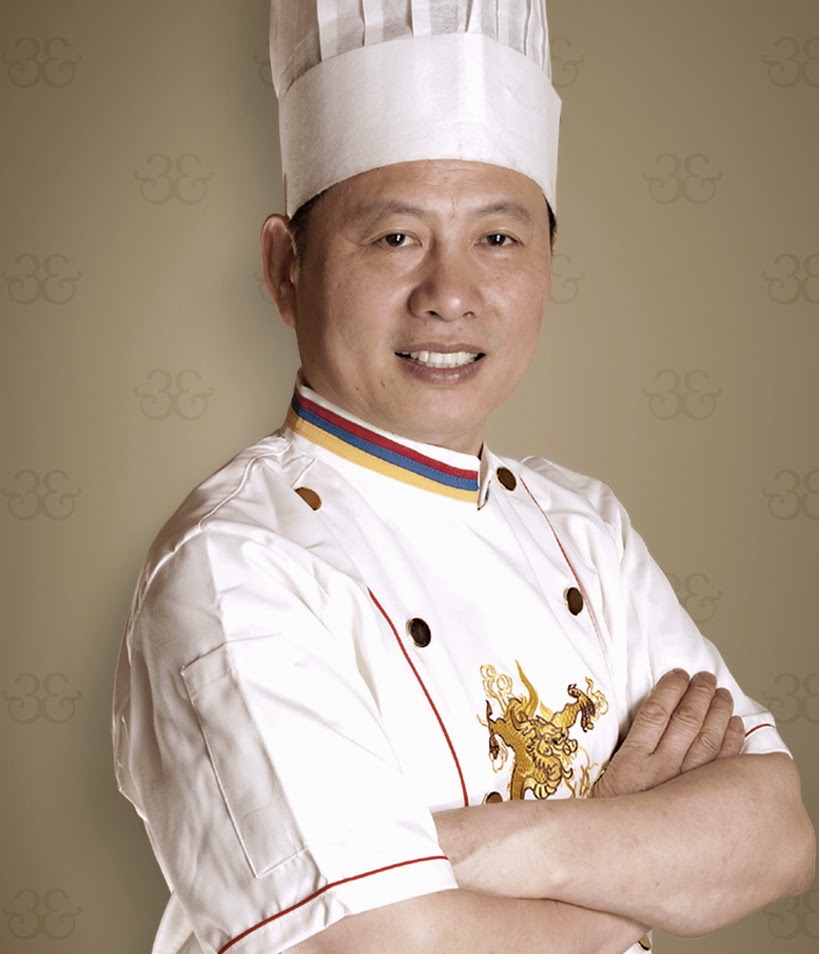
Chef Wu Rui Kang knew he had a tough act to follow. And so he became the first and only Michelin-starred chef of Hangzhou cuisine in the world.
 Chef Wu’s entry into Michelin fame was dramatic. His restaurant’s non-inclusion in the inaugural Michelin Guide Hong Kong 2008 was greeted with howls of disbelief and derision from local food magazines and netizens. The credentials of the Michelin arbiters were questioned, in particular their knowledge of the Chinese food scene in Hong Kong. The following year came the much-deserved nod from Michelin for the Chef, with a one-star ranking.

In fact Chef Wu’s sterling career was hardly heralded. After graduation from university he held a senior post in the Chinese civil service, from which he left to start a small restaurant in Hangzhou. As business grew, he decided to shift his base to Hong Kong, where his father was working at that time as executive chef for a renowned Hangzhou-style restaurant.  Chef Wu opened the Hong Zhou Restaurant in 2006.

While the Chef is, as we have seen, highly esteemed by food circles in Hong Kong, his is an audience that is ardent, initiated, and “focused”. Hangzhou cuisine, while increasingly revered in China, is still received with ambivalence in Hong Kong where Cantonese and Shanghai food reign supreme. But the Chef is patient and resolute.

Tweaking his flavors to suit the local palate is something he has stood against from the start, while the use of air-flown ingredients all the way from Hangzhou is a practice he has always insisted on. Such rigorous measures -- and not half-efforts and compromises -- are what he believes authenticity and reputations are built upon, and what he believes will ultimately win him a large audience for his beloved cuisine. Now he has the star to prove it.

But what makes a great chef? Chef Wu proposes a combination of assets: kitchen ethics, intelligence, and innate gifts. Kitchen ethics implies respect and humility, especially before teacher or master, he says, and the willingness to give your best in everything from cooking to personal hygiene. In short: attitude.


Intelligence is the drive for technical mastery. Chef Wu lists essential areas such as kitchen skills, cost control, and financial/business acumen. Finally, innate talent and passion is a factor. But, stressed the Chef, it must be coupled with a lot of hard work.
Only then will innate gifts make a difference, and raise the aspiring chef above all the others to greatness.


Hong Zhou Restaurant
1/F Chinachem Johnston Plaza
178-186 Johnston Road, Wanchai, Hong Kong
Tel: +852 2591 1898

Sunday, 31 August 2014

FRIED BEEF HOR FUN IN BLACK BEAN SAUCE


Fried beef hor fun is such a common dish among the Cantonese. It is served either ‘dry’ or bathed in thick savory sauce. To be considered a notch above the others, a hor fun needs to be perfumed with wok hei. Yes, the Cantonese, of all dialect groups, hold wok hei in highest esteem. A good chef must have mastered the advanced stir-fry techniques that allow him to deliver power-packed wok hei to certain dishes. And fried hor fun is definitely one of these.

Wok hei is most effectively achieved when the iron wok is heated to smoking point. Oil is then added to increase the heat as well as to lubricate the food that is to be fried. The contents of the wok are tossed and swirled, the addition of more oil coupling with the intense heat to flambé the ingredients. The fumes and aroma thus created is captured in, and perfumes the dish, producing the prized wok hei.

In the past, Cantonese cze cha stalls would use black bean paste in many of their dishes including braised fish bee hoon, braised pork ribs with bitter gourd, and claypot braised fish head. These dishes were very popular then, but the availability of new sauces such as Kam Heong and Tom Yam have seen them decline somewhat.


 Fried Beef Hor Fun in Black Bean Sauce

Beef                             200 g, sliced about 2 mm thick, across the grain
Oil                                1/3 cup
Chye sim                     2 stalks, julienned
Hor fun                        450 g
Garlic                            2, minced
Bean sprout                 50 g
Salt                                ½ tsp
Dark soy sauce            ½ tbsp
Onion                           ½, sliced thickly
Red chilli                      1, julienned
Chinese wine               2 tbsp
Meat stock                   2 cup
Sesame oil                   ½ tsp
Potato flour                 1 tbsp, mixed with 1 tbsp of water 
Egg                               2, beaten lightly
White pepper             ½ tsp
Fried shallots               2 tbsp
Spring onion               1 sprig, julienned

Marinade:
Apple juice                   2 tbsp, used as natural tenderizer, optional
Light soy sauce            1 tbsp
Ginger juice                  1/3 tsp
Chinese wine                1 tbsp
White pepper              1/3 tsp
Sesame oil                    1 tbsp
Potato flour                  1 tsp

Sauce paste– mixed well and reduced to a paste under low heat
Peanut oil                     2 tbsp
Black bean                    2 tbsp, minced coarsely
Yellow bean paste      1 tbsp, mashed
Sugar                            ½ tbsp
Garlic                            2, minced finely
Red chilli                       1, minced finely
Water                            4 tbsp

Method:
  1. Marinate beef and chill for at least one hour.
  2. Heat wok or stainless steel pan until hot. Pour 1 tbsp of oil. Swirl. Add another tbsp of oil. Fry chye sim for 30 seconds. Add hor fun. Swirl hor fun with a spatula in a circular movement. Do not lift hor fun high with the spatula or you risk breaking it into small strands. When hor fun turns slightly golden, push it to one side of the wok. Add ½ tbsp of oil and garlic, give it a good toss and stir in hor fun. Add bean sprout, dark soy sauce and salt, and give it a final toss. Divide hor fun into individual plates. The whole process shouldn’t take more than 4 minutes.
  3. Using the same wok, add remaining oil. Saute onion and chilli in medium heat until onion turns transparent.
  4. Add sauce paste, sugar and mix thoroughly.
  5. Increase heat to high. Add marinated beef and toss the pan continuously. Pour Chinese wine along the sides of the wok, allowing them to dribble to the center.
  6. Pour in meat stock and let it boil for 15 seconds.
  7. Lower heat to medium. Thicken the sauce with potato starch. The sauce should be slightly watery (not too gluey). Turn off the heat and pour egg mixture into the sauce, at the same time using the spatula to stir slowly in one direction.
  8. Scoop gravy onto the fried hor fun in their individual servings.
  9. Garnish it with white pepper, fried shallots and spring onion.

Note: Instead of boiling the sauce paste, it could be fried until all its ingredients (except water) have caramelized, and then simmer it into paste.

Tuesday, 8 July 2014

Duck Wing & Chicken Feet Stew – Going to Extremes


It’s strange but when life is tough and spending power low, people get more creative in amortizing their money. When I was young, nothing in my household went to waste. Books were passed on to younger siblings, or, in my case, as I was an only kid, given to relatives and friends. I would think twice about indulging in a 2nd pair of jeans, and especially, about throwing away perfectly edible food.

I remember vividly how my family would slaughter and apportion a chicken. The best parts of the torso would be used for the main dish, while sub-grade pieces and offal would be set aside to become ingredients for another dish. The bones and feet would be tossed into the stockpot, or, as in this instance, made into a tasty and wonderful dish for nibbling.

Duck wings and duck webs were often deemed suitable only for making stock, yet when stewed, their taste was sublime. I would often cook these underrated pieces with chicken feet or pig belly, and when the dish was kept overnight, it tasted even better. Here’s the recipe I used.


Duck Wing & Chicken Feet Stew

Duck wing                                10, cut into 2
Chicken feet                             10, whole
Dried shitake                           10, soak in water for 20 mins. Drain and keep the water
Oil                                              2 tbsp. preferably lard
Garlic                                        12, whole
Sugar                                        ½ tbsp
Oyster sauce                            2 tbsp
White pepper                           a dash
Japanese cooking wine          ½ cup
Chicken stock                           1 cup
Salt                                              ½ tsp
Dark soy sauce                         1 tbsp

Marinade:
Oyster sauce                            ½ tbsp
Ginger juice                              ½ tsp
Japanese cooking wine           ½ tsp
Light soy sauce                         ¼ tsp

Method:
  1. Marinade duck wing and chicken feet for 1 hour. Drain.
  2. Heat oil. Gently fry garlic until golden brown. Remove and drain. Set aside.
  3. Saute mushroom for 5 minutes in low heat. Add sugar at mid-point.
  4. Increase heat to maximum, sauté meat until it is golden brown.
  5. Add oyster sauce and white pepper, and continue to fry for one minute at high heat.
  6. Pour Japanese cooking wine and let the spirit evaporate.
  7. Add chicken stock and cover the pot.  Simmer for 45 minutes or until the meat is tender. Don’t overcook the meat.
  8. Add garlic and simmer for another 10 minutes with the lid removed.
  9. Reduce stock until it thickens.
  10. Season with salt and dark soy sauce.
  11. Serve hot.

Wednesday, 18 June 2014

Baked Ice-Cream Cake - A Different Approach


Someone gave me a tub of ice-cream that I didn’t quite like. As I was taught as a kid not to waste food, I ran through my cookbooks and googled for recipes trying to find some use for the ice-cream. My eye caught on some key words and the idea of baking flashed through my mind.


I began to piece together a recipe which I thought doable; and so, here is an idiot-proof recipe to bake ice-cream into a lighter version of a pound cake. I loved the result, especially the fragrance that came from the red-bean ice-cream. If you have a sweet tooth, add another 20 g of sugar to the recipe below.


Baked Red Bean “Ice-Cream”

Ice-cream                    230 g, any flavours and liquefied
Self-raising flour          190 g

Method:
1.     Set oven to 180 degree C
2.     Sift flour.
3.     Stir ice-cream until completely melted.
4.     Add self-raising flour and mix well.
5.     Pour mixture into a cake mould and bake for 35 to 45 minutes.
6.     Test cake with a toothpick. If it comes out clean from the batter, remove the cake from the oven.
7.     Let the cake rest on a rack.
8.     Serve cake plain, or with a dollop of ice-cream.