Showing posts with label Modern Cuisine. Show all posts

Monday, 26 August 2013

Bruschetta with Wild Mushrooms – In Memory of a Magazine


I was a journalist for more than 20 years. And in that time I had the good fortune to head a number of leading interior design magazines in Singapore. Some were existing titles, while others were new ones that I conceived and brought into being.

Among my duties – and pleasures – as editor were the visits my team and I made to some of the most beautiful houses in this region. I also met fascinating people -- movers and shakers many of them; and I enjoyed first glimpses of trends as well as privileged access to happenings within the industry. To top it all, I was paid to read mountains of magazines during working hours!

The cover of the final issue.
There was a foreign magazine that had great influence on me, particularly when it came to determining the direction and content of my own work. Metropolitan Home was an American interior and lifestyle magazine that catered to urbanites. Its focus was casual, contemporary living centered around chic, high-end interiors and design.

When the magazine was first launched in 1974, it was called Apartment Life and was aimed at the so-called Woodstock generation. In 1981 the magazine underwent a re-brand, emerging as the hipper Metropolitan Home, with more up-to-date layouts and features targeted specifically at the Baby Boomers.

The interior pages of Metropolitan Home.
Metropolitan Home had gorgeous photographs of interiors that I used to salivate over. It also had some regular columns that I thought were very clever and original for their time. One of these was the ‘Hi/Low’ feature, in which an interior scene with very expensive furnishings is first shown, and this would be followed by its ‘mirror-image’ with furnishings and decorations purchased at a fraction of the cost. I was so taken with ideas such as these that I used them in my own magazines.

Since Metropolitan Home was a so-called ‘lifestyle’ magazine there were recipe pages too, and I would faithfully cut these out, file them, and test-cook them whenever I had the chance.

It was heartbreaking for me when Metropolitan Home folded in December 2009, a victim of the economic recession and the collapsed housing market. This recipe is from the late magazine; and it never fails to wow the audience when I serve it as an appetizer.


Bruschetta with Wild Mushrooms

Baguette                                  2
Olive oil                                   ¼ cup + 3 tbsp
Butter                                      ¼ cup
Dried shiitake mushrooms     50 g, soaked in 2 cups of warm water for 30 minutes,
sliced
White button mushrooms     250 g, thinly sliced
Shallots                                   2 tbsp, minced
Garlic                                       1 tbsp, minced
Salt                                          ½ tsp
Ground black pepper            ¼ tsp
Mascarpone cheese               300 g

Method:
  1. Remove crust from bread. Brush bread generously with olive oil. Toast bread in a 160C oven for 10 minutes or until crisp. Set aside.
  2. Heat butter and 3 tbsp of olive oil. Sauté shallots and garlic until translucent. Add all mushrooms and fry for another 3 minutes. Add mushroom water and simmer slowly until the liquid is fully absorbed.
  3. Remove from heat and season it with salt and pepper.
  4. Let it rest to room temperature.
  5. Spread marscarpone cheese on bread. Spoon mushroom evenly on top of cheese.
  6. Garnish with Italian parsley (optional).
  7. Serve.

Saturday, 6 April 2013

Wing Beans – Adding Zing to Greens


I was introduced to wing beans late in life. I remember it pretty well – it was an office lunch, a potluck, and one of my Malay colleagues contributed an interesting Asian salad.  Its sauce was fairly typical: prawn paste (hei go), crushed peanut, assam juice, and chili sambal; quite similar to rojak. But the combination of greens was intriguing. There was turnip, pineapple, ginger flower, guava, snake fruit, and of course, wing beans.

Just like aragula, wing beans contribute a surprising, refreshing “green” taste, and a hint of bitterness. Wing beans basically add depths of sweetness and a hint of "rawness" to any veggy cocktail, and because of that, I fell in love with it. Nowadays I like wing beans however it’s done -- in salads or simply fried with belachan.

When a Hong Kong newspaper asked me for a Singapore recipe for their Singapore supplement, I contributed the one below without hesitation.


Wing Bean Salad

Wing bean                             1 cup
Long bean                              ½ cup, blanched in hot water
Cucumber                              ¼ cup, cubed
Red chili                                  2, sliced thickly
Onion                                      ½, sliced thickly

Garnishing:
Fried shallots                      2 tbsp   
Dried shrimps                     2 tbsp, soaked and deep fried
Coriander                             1 sprig, sliced

Salad Sauce (mixed thoroughly):
Sriracha                                  3 tbsp
Tomato                                  1 tbsp
Peanut oil                              ¼ cup
Calamansi juice                   1 tbsp
Sugar                                       ½ tbsp
Salt                                           ¼ tsp
White pepper                      ¼ tsp
Durian                                    3 seeds, deseeded
Calamansi                             2, juiced
Sugar                                      1/3 tbsp
Salt                                          a pinch

Method
1.              Assemble all ingredients in a mixing bowl.
2.              Pour salad sauce slowly and toss with the ingredients until it is sufficiently wet.
3.              Spoon the salad in a serving bowl and top with the garnishings.

Monday, 24 December 2012

Feng – An Exotic Highlight of the X’mas Table!


The majority of Eurasians in Malaysia and Singapore are descendants of early Portuguese navigators and explorers, who arrived on these shores about 500 hundred years ago. These intrepid men braved the then uncharted waters of the world in search of wealth and glory, travelling from Lisbon to Africa, and eventually to Asia. When they reached Southeast Asia, these Europeans immediately set up an outpost in Malacca, the gateway between East and West, to monopolize the highly lucrative spice trade of the region.

The Portuguese ruled Malacca under a hostile social environment: so as not to be outnumbered by the natives, and to create harmony under colonial rule, the Portuguese promoted inter-racial marriages between themselves and the local people. They even brought women from their own country known as “Orphans of the Queen”; these women came from all castes of Portuguese society, including even the nobility. However, the local spouse would have to convert to Catholicism before the marriage could take place, in line with the missionary objectives of the conquerors.

From these marriages a new ethnicity was born, known as Eurasian -- or more accurately Cristang. With their exotic blend of European and Asian parentage, the Eurasians were accorded many rights and privileges enjoyed by the governing classes, and bequeathed a rich and fascinating legacy to our modern cultural mix, most famously, in food.

Combining western cooking methods with Eastern ingredients, the Eurasians created a cuisine with a unique identity. Like their European counterparts, Eurasians usually marinated their food with lime, lemon or vinegar, and, at the same time introduced chilies, galangal, and lemon grass into their curries. The Malaccan Eurasians also came to acquire the Peranakan and Chinese fondness for sweet-and-sour dishes, and the practice of stir-frying their ingredients. The most famous Eurasian dish in this region would probably be Devil Curry.

Christmas is an important celebration for Eurasians as it is a time for sharing joy and love among one other. Preparations would start weeks ahead. Beginning with the spring-cleaning of the house, and preparation of Christmas treats and cookies, until the eve of Christmas when the family would return from church, wish each other season’s greetings and sit down to a festive supper. Celebrations continue until Boxing Day with more food being served, feng (pronounced ‘fing’) being one of the “musts” for Christmas, and also at weddings.

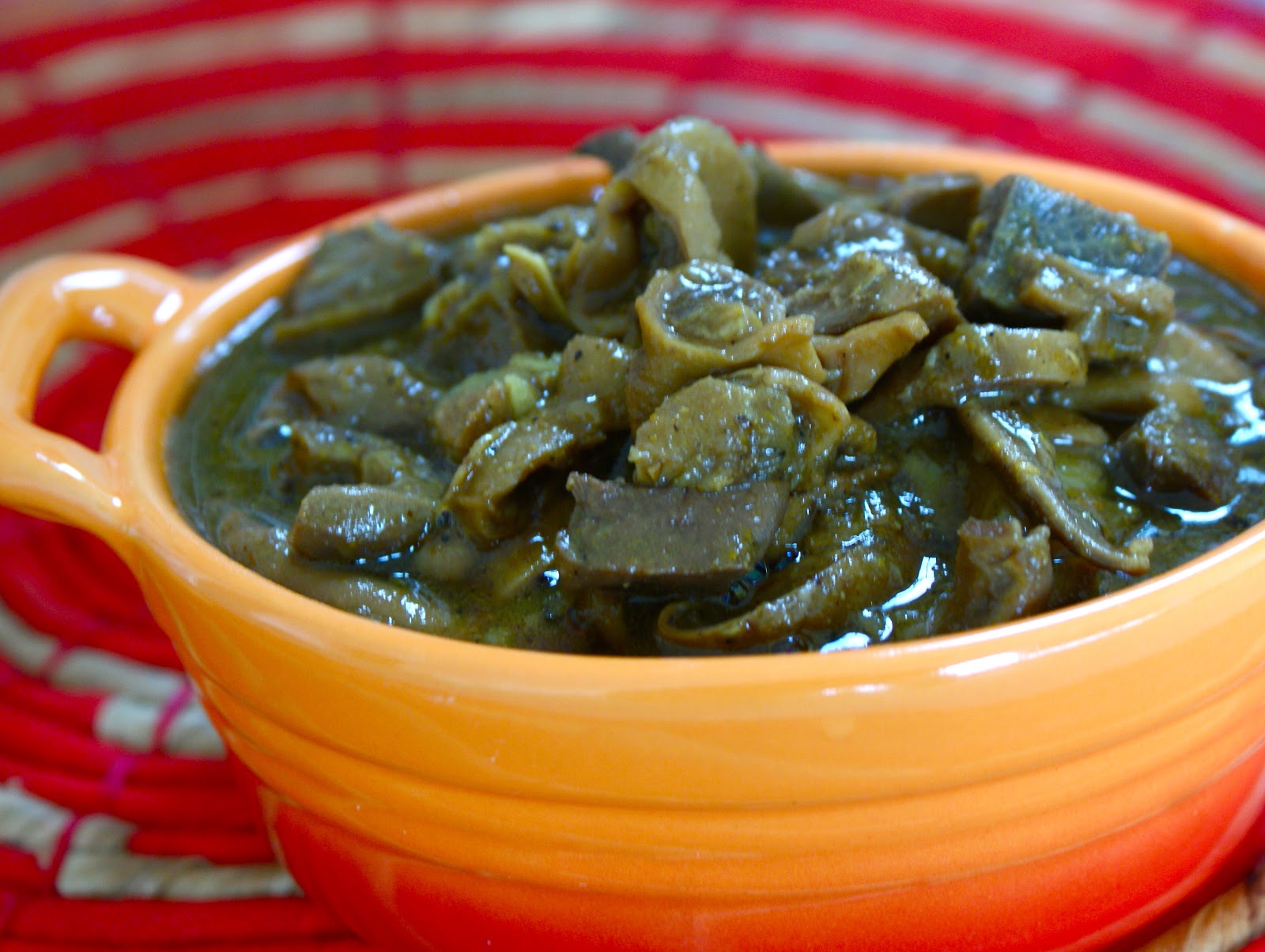
It was believed that feng came about from the first Portuguese sea explorations to Asia. Animals were taken onboard the ship to be killed for meat, and because of the scarcity of food, no part of the animal was to be wasted. Feng became a dish where the innards and the poor cut, especially pig’s entrails and offal, were stewed with spices and eaten over days.

Feng

Pork belly                   300 g
Pig’s tongue               1
Pig’s intestine             150 g
Pig’s ear                      2
Pig’s heart                  1
Pig’s kidneys              2
Pig’s liver                    200 g
Water                          1½ litres
Cloves                         15
Star anise                     2
Cinnamon sticks         5
Oil                               ¼ cup
Ginger                         50 g, julienned
White vinegar             5 tbsp
Salt                              3 tsp
Brown sugar               3 tbsp
Dark soy sauce           1 tbsp

Paste (blended into fine paste):
Shallots                       500 g
Garlic                           25 g

Spices (ground):
Coriander seeds          6 tbsp
Cumin                         1½ tbsp
Fennel                         1½ tbsp
Black peppercorns     1 tbsp
Cinnamon                   2 cm
Star anise                    1
Turmeric                     20 g               

Method:
  1. Boil water with 8 cloves, 1 star anise, and 3 cinnamon sticks.  Cook pork belly for 15 minutes. Drain and set aside.
  2. Cook pig’s tongue, ear and intestine for 20 minutes. Drain and set aside. Scrape skin off the tongue and rinse thoroughly.
  3. Cook kidneys and liver for 5 minutes. Drain and set aside.
  4. Dice all cooked meat into cubes.
  5. Saute ginger with oil. Add the remaining cloves, star anise and cinnamon sticks. Lower the heat when you can smell the fragrance.
  6. Add blended paste and fry for 15 minutes under low heat. When the onion starts to caramelize, add the spice mixture. Increase the heat to medium and continue to stir-fry until oil is seeping through the paste.
  7. Add pork belly, intestines and white vinegar. Stir-fry on low heat for about 10 minutes.
  8. Add ear, tongue and 1 cup of sieved stock; simmer for 10 minutes. Add the rest of the meat and simmer for further 10 minutes.
  9. Season it with sugar, salt and dark soy sauce. Cook for another 2 minutes before turning off the heat.
  10. Let the dish stand for 30 minutes or keep it overnight before serving.

Note: Coriander seeds should be dry-fried until they are fragrant before grinding to yield a strong flavor. 

Monday, 13 August 2012

Phoenix Eye – Little-Known Delight


I was in Hong Kong two weeks ago; Phoenix Eye seed (sterculia nobilis) was in season.  The pod resembles the slit eye of a phoenix and the seed looks like a black nut with one side flattened. Phoenix Eye is also known as nine-layered skin, as one needs to peel through several layers before the edible pale-yellow kernel is exposed.

In Hong Kong, the kernel is normally used as a substitute for chestnut in stew or soup. It has a powdery nutty texture when eaten boiled, and a distinct flavor with a mild, sweet aftertaste.

Phoenix Eye is used by the Chinese as a medicinal remedy for round worm, gastric discomfort, and even hemorrhoids. If you intend to use it, however, do consult a Chinese physician for the exact prescription.

For me, I have decided on a Western approach for this recipe. A friend turned up at my home unexpectedly bringing a couple of wines, so I decided to turn the Phoenix Eyes I had with me into cocktail nuts for the evening. The end result was surprisingly yummy.


Phoenix Cocktail Nuts

Phoenix Eye nuts        600 g
Sea salt                         60 g
Five-spice powder       1 tbsp
White pepper              1 tbsp, coarsely grinded
Butter                           3 tbsp

Method:
1.    Microwave nuts for 3 minutes. Remove the shells until the white layer of the seed is exposed. Set aside.
2.    Mix nuts, sea salt, 5-spice powder and black pepper in a French oven.
3.    Fry the nuts in low flame for 15 minutes. Switch off the flame, add butter and continue to fry the nut for another 20 minutes.
4.    Remove the nuts and strain off the excess butter.
5.    Serve or store the nuts in a glass bottle once they have cooled.