Showing posts with label Reviews. Show all posts

Sunday, 28 September 2014

The Man Behind the Michelin-Starred Hong Zhou Restaurant


It was elite credentials by any standard – to be among the first batch of chefs awarded the country’s highest culinary honor, the National Grade of China; and to be recognized as one of China’s 8 most illustrious chefs. But these were not Chef Wu’s, they were his dad’s.
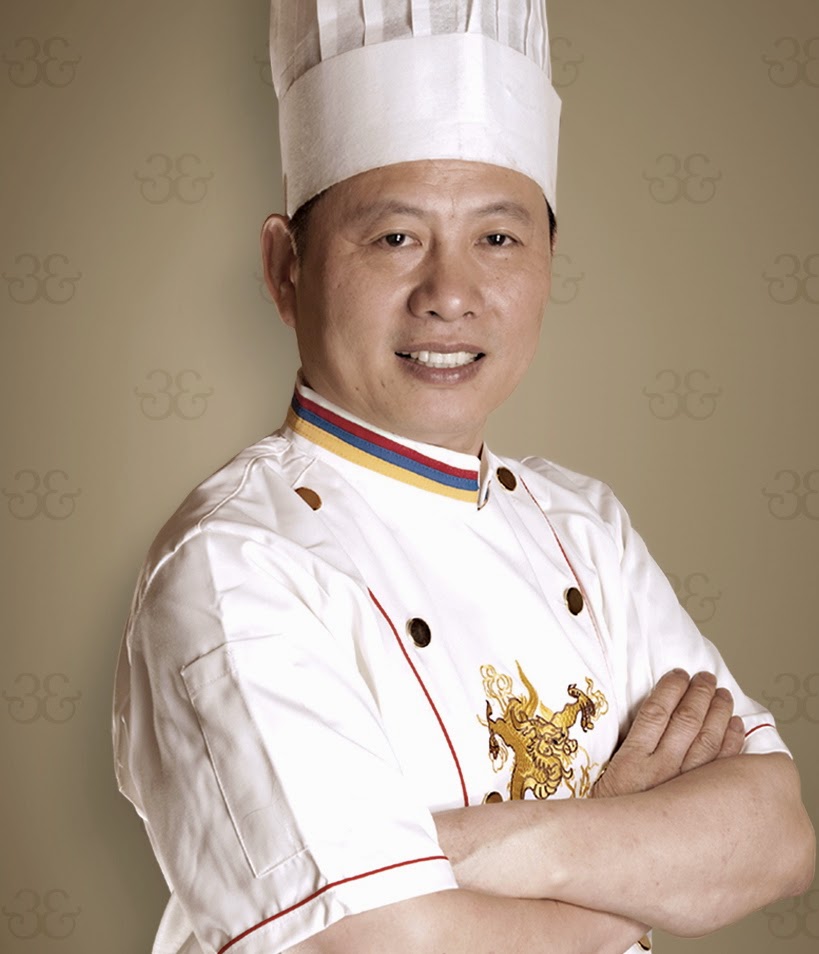
Chef Wu Rui Kang knew he had a tough act to follow. And so he became the first and only Michelin-starred chef of Hangzhou cuisine in the world.
 Chef Wu’s entry into Michelin fame was dramatic. His restaurant’s non-inclusion in the inaugural Michelin Guide Hong Kong 2008 was greeted with howls of disbelief and derision from local food magazines and netizens. The credentials of the Michelin arbiters were questioned, in particular their knowledge of the Chinese food scene in Hong Kong. The following year came the much-deserved nod from Michelin for the Chef, with a one-star ranking.

In fact Chef Wu’s sterling career was hardly heralded. After graduation from university he held a senior post in the Chinese civil service, from which he left to start a small restaurant in Hangzhou. As business grew, he decided to shift his base to Hong Kong, where his father was working at that time as executive chef for a renowned Hangzhou-style restaurant.  Chef Wu opened the Hong Zhou Restaurant in 2006.

While the Chef is, as we have seen, highly esteemed by food circles in Hong Kong, his is an audience that is ardent, initiated, and “focused”. Hangzhou cuisine, while increasingly revered in China, is still received with ambivalence in Hong Kong where Cantonese and Shanghai food reign supreme. But the Chef is patient and resolute.

Tweaking his flavors to suit the local palate is something he has stood against from the start, while the use of air-flown ingredients all the way from Hangzhou is a practice he has always insisted on. Such rigorous measures -- and not half-efforts and compromises -- are what he believes authenticity and reputations are built upon, and what he believes will ultimately win him a large audience for his beloved cuisine. Now he has the star to prove it.

But what makes a great chef? Chef Wu proposes a combination of assets: kitchen ethics, intelligence, and innate gifts. Kitchen ethics implies respect and humility, especially before teacher or master, he says, and the willingness to give your best in everything from cooking to personal hygiene. In short: attitude.


Intelligence is the drive for technical mastery. Chef Wu lists essential areas such as kitchen skills, cost control, and financial/business acumen. Finally, innate talent and passion is a factor. But, stressed the Chef, it must be coupled with a lot of hard work.
Only then will innate gifts make a difference, and raise the aspiring chef above all the others to greatness.


Hong Zhou Restaurant
1/F Chinachem Johnston Plaza
178-186 Johnston Road, Wanchai, Hong Kong
Tel: +852 2591 1898

Tuesday, 17 June 2014

Keng Eng Kee Seafood – A Promising Start


Walked past Keng Eng Kee Restaurant for years and never once had the urge to dine there. Perhaps I was confused by what I saw: an air-con room without an attached kitchen and a cze char stall a few meters away that I much later learned were, in fact, two parts of a single restaurant.

Having said that, my foodie friends were talking about this restaurant of late, and I had read some favorable reviews of it on the Net; so I decided to give it a go. The prices on the menu shocked me in a very pleasant way. They were cheap, and cost the same if you had dined in the air-con room (so I was told) -- if you could get a table there.

The first dish that arrived at our table was, in fact, the first photo to catch my eye on the menu. Pearl Roll or明珠卷 in Chinese, looked good and sounded poetic. Deep-fried bean curd skin with salted egg yolk, ham and mushroom, the dish was visually attractive and I liked the crispy skin. The inclusion of ham was odd though, and didn't help the taste much, but it made a nice starter, and, at least, was eye candy.

For those who long for the taste of home cooking, the second dish was it -- a very straightforward version of sweet & sour pork! Unfussy, uncomplicated, and easy to replicate, just like mum’s cooking. The only nitpick I had with the dish was that its batter was a bit too soggy for my taste, but hey, not all mothers cook like a chef.

The next dish was by far the one I enjoyed most. Cuttlefish Kang Kong doesn't require much cooking, but the sweet sauce is key. The sauce served here was delicious but it tasted familiar. A final drop of white wine before leaving the kitchen would have made it perfect. However, I noticed another version of this dish featured in the post of one of our leading food bloggers, but his raving review of the dish obviously differs from mine. Do I detect a double standard here? Hmmmmm…..


The next dish got me thinking: Maybe it's the quality of pork available, but is getting a good Claypot Liver in Sg as difficult as looking for an attractive guy who isn't gay? One of the best efforts I’ve tasted thus far belonged to Manhill Restaurant. I was told the chef at Keng Eng Kee was a lad of 30 or so, and that he took pains to work at his wok technique. His mastery of heat control showed in the perfect ‘doneness’ of the liver. However, the liver slices were insufficiently uniform and were definitely too thin such that they lacked bite. I only wished the chef could have lavished as much time and effort on the knife as he did on the wok. It would have made him more rounded as a traditional Chinese kitchen master. He should have been more generous with the ginger and Chinese wine too.

The finale was a dish I was so looking forward to – Moonlight Hor Fun or 月光河粉. To begin with it was a dish that never fails to receive raves on the Net, and deservedly so. Secondly I had been on the hunt for a truly good specimen of it ever since the famous stall at Zion Food Center closed. Maybe I had set my hopes too high, but what I was served was utterly disappointing. The dish was lukewarm, with a raw egg nestled in the middle of hor fun that lacked any wok hei – and this from a chef who was known to be good at ‘throwing smoke’. The lack of heat in the dish actually raised the specter of Salmonella in my mind as I tossed the noodles.

Keng Eng Kee is a restaurant I would gladly return to, but it has its its rough edges, some glaringly so. The chef has much of his career ahead of him, and would do well to take all the accolades hurled his way, in stride. He obviously has a lot to learn, but his heart, as far as cooking is concerned, is in the right place.  

Keng Eng Kee Seafood
Blk 124 Bukit Merah Lane 1
#01-136
Singapore
Telephone: 6272 1038

Wednesday, 2 April 2014

Reputation – Bane or Blessing? A Visit to Desmond’s Creation


Chef Desmond Chia needs no introduction. He was one of two sons of the founder of Sik Wai Sin, one of the most reputable zi char restaurants in Singapore, famous for its limited but well-executed Cantonese menu. Diners were known to brave the heat at the non-air-conditioned Sik Wai Sin, waiting hours for a superb “home-cooked” meal. And while his brother presided over the steamed dishes at the restaurant, Desmond was the “man behind the fiery wok”, honing his skills with fried dishes for 13 years.

So when Chef Desmond decided to open his own restaurant, Desmond’s Creation, I had high expectations of it. I arrived at 11.45 am sharp – the opening time shown on their official operating hours; the shutter was down, finally opening at 11.55 am.

It soon became obvious that Desmond ran a tight three-person operation -- two men including himself in the kitchen and a woman manning the dining room. To their credit, and my amazement, things proceeded smoothly throughout the busy lunch hour and food was served without hiccups.

It was also instantly obvious that Desmond was not a risk-taking chef. The menu remained small and 99% of the dishes were “imported” from Sik Wai Sin. My hopes rose even higher upon seeing this, as I reckoned that nothing could possibly go wrong with such a small number of dishes – dishes that the chef had cooked for umpteen years.

The first dish to arrive was Braised Black Bean Pork Rib with Bitter Gourd. Usually, the black bean paste would be well sauted with the meat, and then with the vegetable. Here, I tasted nothing of the “fragrance” of a well-fried dish; it felt like the whole dish had been braised without undergoing fire.


Fried Beef Kailan, which came next, was decent. The vegetable was well fried and perfumed with “wok hei”. The downside was that some beef was cut not across the grain, leaving it a little on the tough side. Also, it would have been perfect had the chef sprinkled on a dash of Chinese wine before serving.

When we were ordering and had asked for tofu, the woman told us bluntly that this dish would come with “big” prawns. I suppose that was how restaurants maneuvered to increase revenue; I also got the impression that those who ate at Desmond’s Creation didn’t mind paying for slightly more “premium” food. Either way, the prawns proved over-cooked and hard. To make the matters worse the tofu was over-fried too. What we ended up with was a plate of hard prawns, dry tofu and diluted gravy.

Steamed Minced Pork with Salted Fish was a personal favourite of mine since I was a kid. In Chef Desmond’s version, he hand-chopped the pork, and this alone earned him loads of brownie points in my book. The glitch in the dish, however, was that he over-mixed the meat, causing the protein to over-bind and making the meat hard rather than crunchy.

But my biggest problem with this dish was the salted fish used. As noted earlier, since the customers were prepared to pay slighter more for their food, Chef Desmond should have opted for better-quality salted fish. The best salted fish (梅香马鲛鱼) for this dish would have been Spanish mackerel aged between 10 months and 3 years. The fish would be prepared by salting and sun-drying it for another 2 years minimum, which would leave the flesh slightly pink near the bones and with a pungent and ‘fleshy’ scent.

Even the portion of the salted fish that Chef Desmond used was too small for the amount of pork in the dish. The salted fish should have been of an amount sufficient to pervade thoroughly the meat and gravy during steaming. In the end, I could only detect a whiff of fish when the plate first landed on the table, and when I actually ate the salted fish itself.

Another downer was the Sweet & Sour Pork. The meat morsels were too small, slightly burnt, and too thickly coated with batter.  The sensation was of eating sweet & sour pork -- in its vegetarian version.

Steamed Fresh Carp with Bean Paste was the best dish of the meal. It was brilliantly executed -- Chef Desmond timed to perfection the cooking of the fish, and the bean paste was well balanced with a cocktail of sourness, sweetness, and savouriness.

These were dishes I had grown up eating from zi char stalls all across Singapore; so, like I said, I had high expectations. Perhaps too high. Perhaps by going it alone when he did, the chef bit off more than he could chew; perhaps his skills and experience fell a little short of his dreams. Perhaps.


Desmond’s Creation or Sik Bao Sin
592 Geylang Road
Singapore
Telephone: 6744 3757

Thursday, 20 February 2014

Sin Huat Eating House - A Meal That Left Me Crabby


Do I trust a foreign food personality to tell me what’s good on our local streets? Apparently not! Sin Huat Eating House won Mr. Anthony Bourdain’s heart and he sang praises (loads of it) on his TV series.


I had heard things about this restaurant. Its owner Chef Danny was known as the Food Nazi of Singapore and diners gladly paid through their noses for his superb, fresh seafood. You didn’t order your meals, so much as have the orders dictated to you by the chef, who would then cook your meal personally. And you wouldn’t know the size of your portion, or its price until the receipt arrived.

Because of this, I took a long time to convince myself -- and save enough money -- to have a first-hand encounter with this much talked about chef.

The restaurant was pretty quiet on the day of my visit, save for two tables of eight and five, and ours. One of my eating companions was a regular and the chef knew him well. Chef Danny offered a rather limited menu, and it seemed 90% of his dishes were de-rigueur with the regulars. We were no different.

Chef Danny delivers his food packed full of very strong flavours, especially garlic. A Singapore celebrity chef once told me, “If I boost my stock and flavours to the maximum, customers would be so overwhelmed that few would be able to tell the difference between good and mediocre cooking”. Chef Danny seems to subscribe to this philosophy.

A case in point was the Steamed Frog’s Legs with Essence of Chicken. Eight bottles of Chicken Essence were poured into a plate of eight perfectly steamed frogs, with garlic. With such an avalanche of robust chicken flavour, little culinary skill was needed for the dish to pack a wallop.

There were other instances. The dish of steamed scallops was overdone but the heavy bath of bean paste sauce was enough to mask its faults, along with much of the intrinsic flavour of the scallop. A similar sauce was used on the fried/braised crayfish. Again, I had to rely largely on my sight to discern what meat I was eating.

A few dishes stood out though. The stir-fried kai lan – usually a simple, supporting dish -- was delicious. It had the right amount of garlic, and the vegetable was crisp and flavoursome. Though it wasn’t cheap, I would gladly pay for it. On the other hand, the MOST cut-throat dish of the evening was the blanched dog conch or simply gong gong to the locals, served with a very tasty dip that was most likely a concoction of oyster sauce, garlic, chilli and buckets of processed flavouring. At $25 per kg, the owner of this restaurant could easily have bought a bungalow in a prime district in no time – if he hasn’t already done so.

The steamed squid was well executed and it was my 2nd favourite dish of the evening. Again the garlic was slightly heavy handed. To his credit, Chef Danny’s handling of the steaming times for the seafood in most of his dishes was near impeccable. However, his main seafood ingredients lacked the flavor of what they were -- they didn't stand out but were buried under his overly strong sauces and dips.  I suspect this is Chef Danny’s trick: to mask and/or distract from his inability to balance his spices and sauces with finesse.

The final dish of braised crab mee hoon was my main purpose for coming to this restaurant; after all this dish made Chef Danny famous in this infamous red-light district. It consisted of two medium crabs and a handful of mee hoon. The mee hoon was very tasty, but lacked the flavour that mattered the most – that of the crab itself. How come? I wondered. Crab imparts a distinctly robust and sweet flavour; and two crabs’ worth of it would certainly have made its presence felt in the dish. Was it buried under heavy MSG or chicken flavouring? I wasn’t sure. But it led to my companions and I consuming ¼ of our national water reserves during the meal and after we got home that night.

Here is my concluding shot: when a foreign food personality or two visits some eatery in Singapore and delivers an encomium, we fall for it hook, line and sinker. Are we so insecure in our own judgments? After all, we, of all people, should know our own food better than anyone. This thought came to me strongly on this occasion. To whip up a tasty dish is not difficult: just load it with MSG and off-the-shelf broths. It's the mastery of precise cooking times that, in my opinion, is Chef Danny's ONLY true achievement. The textures were unfailingly right -- but where were the delicate flavors of seafood? I couldn't detect any of it in all the dishes that I ate. And to me, that's a major letdown.

P.S. I doubted the eight of us could have eaten 3 kg of dog conchs and 3 kg of scallops; but that was what the receipt said.


Sin Huat Seafood Restaurant
659/661 Geylang Road
Singapore
Telephone: 6744 9755