Sunday, 13 January 2013

The Jumping Table – Masterchef Sin Leong Cooks


I’ve eaten Cantonese food for much of my life. So, when I was writing this particular post, it suddenly dawned on me how much my judgments and opinions regarding Cantonese cuisine have been influenced by the so-named ‘Four Heavenly Kings of Singapore Cuisine’ – namely Masterchefs Sin Leong, Hooi Kok Wai, Tham Yui Kai, and Lau Yoke Pui.

Masterchefs Hooi Kok Wai (left) and Sin Leong
Throughout the 60s and 70s, when I was only eight or nine, I was already eating at least once or twice a week at their restaurants. I would visit each restaurant in turn with one or two specific dishes already in mind: these would be the Cold Dish and the Shark’s Fin Soup at the Lai Wah Restaurant run by Tham Yui Kai and Lau Yoke Pui.  At the Dragon Phoenix Restaurant of Hooi Kok Wai, it would usually be the Yam Cake and the Steamed Seafood, and the once-a-year Tossed Yue Sheng.

For the Sin Leong Restaurant at Serangoon Road, my favorites would be the USA Duck, and the Glass Prawns. On top of these meals would be the many wedding dinners, birthday parties, and other celebrations that I also attended down the years; these were usually held at Red Rudy and Red Star -- the two later restaurants co-owned by the four masterchefs.

Hence, I could justifiably, and proudly, proclaim that I literally ‘grew up eating heavenly food!’

Even as a boy, I would sit by the Rediffusion, and occasionally the TV, to learn new dishes from Tham Yui Kai, who frequently appeared hosting cooking shows. Tham Yui Kai was the most publicly ‘visible’ of the four – he was a household name through his media spots and his many cookbooks. I had also attended the cooking classes at the community centres conducted by Tham occasionally. In no small measure, these four men were my inspiration and ‘mentors’; they helped educate and shape my palate when it came to high Cantonese cuisine.

Sadly, many of the dishes I am familiar with are no longer considered ‘in’; they’ve disappeared from menus, and, it seems, from the average culinary consciousness altogether. It’s therefore been a dream of mine to savour once again the ‘good old taste’, and have the chance to reminisce with like-minded friends about the golden era of Chinese cuisine in Singapore.

The menu, hand-written,
by Masterchef Sin Leong.
The opportunity came my way last week when I met Masterchef Sin Leong. I asked him to cook the ‘classic dishes’ of his kitchen. He gamely obliged and immediately wrote up a menu drawn from his famous repertoire. But I wanted to take it a step further, and asked Sin Leong to cook his master’s recipes instead.  The four heavenly kings began their careers at the Cathay Restaurant in the 1950s, studying under the China-born, Hong Kong-trained Grand Masterchef Luo Chen. The Cathay Restaurant, which belonged to Mr. Loke Wan Tho, a HK-based businessman who also owned the Cathay Film Organization, was one of the most popular and prestigious fine dining restaurants of that era.

Masterchef Sin Leong, today in his 80s, paused for a moment, pondering my request, then said yes.  He told me that he would need to cook the dishes himself, with the help of Masterchef Hooi, as his chefs were not familiar with the recipes.

It would be a very rare, hands-on performance from the two great chefs themselves!
And so the date was set, and I looked forward to the meal on 10 January 2013 with the excitement of a little schoolboy…


APPETISERS

The first four appetisers were classics from the pre-70s era, normally served at wedding banquets and formal functions.

The FRIED SHARK’S FIN OMELETTE (桂花翅) served that night was the Singapore version, which was markedly different from the original version from Guangzhou. In China, eggs would make up only 15% of the omelette, the rest being shark’s fin, bean sprout, and Chinese ham. When fried, the Guangzhou-style omelette would look like osmanthus flowers clinging to the shark’s fin, hence its name, 桂花翅  , meaning Osmanthus Shark’s Fin. In Singapore, eggs made up of 75% to 80% of the dish, resulting in the richness of the egg permeating the dish. With each bite, the diner would feel the crunch of the shark’s fin – as I did with this wonderful dish.

COLD SALAD PRAWN (沙律明虾) is a fusion dish much influenced by the British colonial period, where salad cream was widely used in colonial kitchens. The bottled salad cream is usually rewhipped with sugar and a dash of citrus juice. The huge tiger prawns are par-boiled, then soaked in icy water to stop the cooking process, as well as to make the meat crunchy.  I loved this simple dish with its oh-so-nostalgic tastes. But sadly, it is so hard to find a good version of it these days.

Those who have dined at the Spring Court restaurant would find FRIED CHICKEN’S LIVER (蚧炒凤肝) familiar. Sin Leong revealed to me that the four of them started as junior chefs at Spring Court during the 50s, before moving on to the Cathay Restaurant. Hence, Sin Leong’s version of this dish is greatly influenced by his apprenticeship at Spring Court – where the minced chicken liver, chicken meat, and pork were marinated, then packed into a ball with a salted egg yolk at its center. The ball was then deep-fried and sliced into 10 portions.

PAN-FRIED CHICKEN ROLL (煎鸡卷) was a ‘new creation’ developed by the four chefs under the guidance of their master. The chicken meat was flattened and rolled, then braised in a special sauce after being pan-fried to 70% doneness.

SOUP

DOUBLE-BOILED CHICKEN STUFFED WITH BIRD’S NEST (凤吞燕)
In classic Cantonese cooking, double-boiled soups are reserved for fine dining. The double-boil method works well when delicate Chinese herbs and delicacies are used. The hours of double-boiling would yield soup that is light and pure, and that allows the original and unaltered flavours of the meat and herbs or delicacies to come through perfectly. Tonight, Sin Leong had stuffed bird’s nest into a deboned and gutted, but otherwise intact, chicken, that was then double-boiled in a superior broth. It was light and packed with the essence of chicken.


MAIN COURSES

BRAISED PORK TROTTER WITH BUNS (红烧元蹄配荷叶包)
This deceptively simple dish takes at least one full day to prepare. The trotter will be tied, and caramelized before braising in a special sauce for hours. Towards the end, the sauce would have been reduced to thick gravy. The test lies in the first bite; wherein the slight hint of sweetness titillates the taste buds, followed by the richness of the meat and sauce. The hours of braising would also have softened the meat fibres, resulting in pork that literally melts in the mouth.

BRAISED DUCK STUFFED WITH LOTUS SEEDS (八宝鸭)
This is another classic dish of the Cantonese menu. As he cooked, Masterchef Hooi lamented the fact that once, it was standard kitchen procedure to debone a duck and yet retain the shape of the bird. These days, few chefs are left who are able to perform this task well; so most restaurants now offer this dish with the bones intact.

After the bird is stuffed with lotus seeds, diced liver, ham and mushrooms, it will be fried and braised for hours. There is a slight difference from the China version as far as the timing of the braise is concerned. In China, the duck will braise for at least eight hours, while the local version braises for around three hours. Part of the reason is that Mainland Chinese prefer their duck soft as tofu, while we, Singaporeans, prefer a meaty bite. Nevertheless, I love both versions as each offers a different sensation to the taste bud.

STEAMED SOON HOCK ALA TRADITIONAL CANTONESE STYLE (古式蒸顺壳)
To steam a fish to perfection requires skill, as fish tends to overcook in a matter of seconds. The golden rule to gauge this perfection is to examine the inside of the fish when it is served: there should a slight pinkish tone where the meat lies closest to the bone.

Tonight, the fish was done perfectly. A special sauce of superior light soy sauce, pork, and preserved cabbage was poured on the fish once it was cooked. Before the fish was served, it was then further baptized with a scoop of boiling lard.

BRAISED WHOLE ABALONE WITH BROCCOLI (红烧原粒鲍鱼配西兰花)
Masterchef Sin Leong braised the 18-head canned abalones in superior broth for hours before thickening it with starch. Maybe I’ve been spoilt by the high standards set by the Hong Kong chefs, but I was a bit blasé eating this version. My dining companions, however, loved it.


CLAYPOT RICE WITH PRESERVED SAUSAGES AND CHICKEN (腊味砂煲饭)
I enjoyed this version very much. The rice was well cooked, with each grain coated with the preserved sausage “oil”, without tasting like it was an overdose. The taste of each and every ingredient came through with every bite, as Sin Leong had replaced the heavy dark soy sauce with a light superior sauce.

DESSERT
I typically don’t harbour high hopes for Chinese desserts in restaurants here, so I simply opted for the herbal jelly to end my dinner, and it was decent.

This dinner was one of the highlights of my eating life, as both Masterchefs Sin Leong and Hooi Kok Wai successfully recreated the outstanding standards of Chinese cooking that I remembered from the golden 60s. I was also touched to see Masterchef Sin Leong filled with such high spirits and enthusiasm. He wore a perpetual child-like grin the entire night, and was clearly thrilled when we all queued up for his autograph! He was wistful when he said that the dishes he cooked for us that night were no longer appreciated by the young, and therefore, he hardly cooks for the public anymore.

Sin Leong’s words left me with the fervent hope that our younger generation should pay some heed to the classic dishes of the past, for these dishes are the foundation that has shaped and informed the cuisines of today. In our rush to embrace the new, we should not forget the culinary masters who came before us.

As the saying goes: we see farther, because we stand on the shoulders of giants.


Red Star Restaurant
54 Chin Swee Road
#07-23
Singapore


Photography by: Mark Ong


Saturday, 5 January 2013

Red Bean Soup – Sweet and Precious Dessert


In Cantonese homes, red bean soup is one of the most popular desserts at the dining table. The ingredients are simple: red bean, water, sugar, and dried tangerine peel. Here are some little known facts about red bean soup -- this simple dessert was listed in the Chinese medical “bible”, Ben Cao Gang Mu (本草纲目), as a remedy to “cool” the body and to detoxify it. It is also described in the ancient manual as an aid to eliminating water retention and preventing constipation.

Since the ingredients for this dessert are simple, for best results, use the best grade possible for each ingredient. I would normally pick red bean from Hokkaido, Japan, and cane sugar directly from Guangzhou, China. But the most important ingredient would be the dried tangerine peel.

There are various grades of peel available, with prices ranging from a few dollars to thousands of dollars per 50 grams, depending on origin and age. Dried tangerine peel is much treasured because it is believed that the older it is, the better its taste and aroma. In fact, tangerine peel is much like wine -- with age its color turns a beautiful dark golden brown, and its scent becomes robust, earthy and aromatic. The Cantonese believe it possesses medicinal value, and most Chinese medical doctors would prescribe it as part of a medicinal concoction for cough as it releases excessive phlegm in the lungs, and also as a means to improve digestion.
This dried tangerine peel is around 30 years old

The Cantonese on the mainland and in Hong Kong use tangerine peel often in their cooking, be it in savory dishes or sweet desserts. An effect the tangerine peel has on a dish is to purge away unpleasant smells and the taste of game meat.

These days, aged tangerine peel can be worth its weight in gold. The best are from Xinhui, a province in Guangzhou, but their existence is precarious. The expanse of orchards producing them has dwindled from 140 000 acres before the Cultural Revolution to about 700 acres in the early 90s. However, in recent years, the burgeoning demand for this ingredient has again motivated farmers to increase the area of plantations to around 2 000 acres.

When buying dried tangerine peel, always be mindful of where it came from. The most prized are those harvested in Xinhui, however the ones most commonly found in the market are from Guangxi, which are less robust in taste and fragrance.

When the peel is first harvested, it is set to dry for about three years before it is taken to the market. When storing dried tangerine peels, do not place them in airtight containers; instead allow them to “breathe” in a dry and cool environment, so that fermentation could continue to age the peel. Once a while, the peel should be taken out for sunning to get rid of fungus and bacteria.

Red Bean Dessert Soup with Dried Tangerine Peel

Red bean                     250 g, soaked 2 hours and drained
Water                           3 liters, preferably mineral water
Dried tangerine peel   5 g, soaked 30 mins, scrape off white pith
Rock sugar                   ¼ cup
Cane sugar                   4 tbsp


Method:
1.    Boil red bean, water and rock sugar vigorously for one hour.
2.    Scoop ¾ of the red bean and push through a fine sieve. Discard all bean skin and lumps. Return the sieved bean to the pot and simmer for one hour.
3.    Add dried tangerine peel and continue to simmer for another hour. The tangerine peel will start to disintegrate into the soup.
4.    Add cane sugar and stir well.
5.    Serve while it is hot.

Note: Groundnuts or lotus seeds are often added into this dessert for extra bite. 

Monday, 24 December 2012

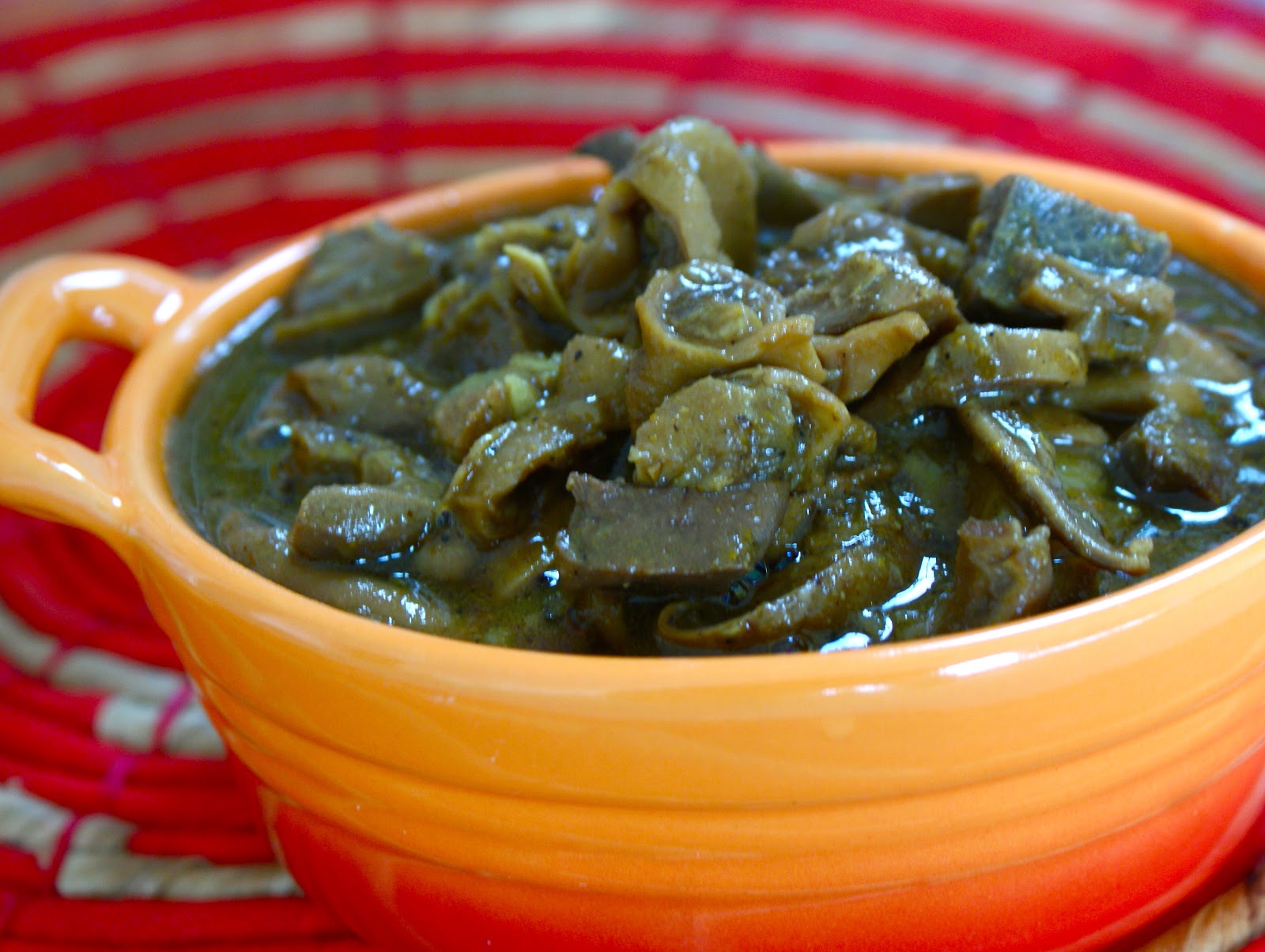
Feng – An Exotic Highlight of the X’mas Table!


The majority of Eurasians in Malaysia and Singapore are descendants of early Portuguese navigators and explorers, who arrived on these shores about 500 hundred years ago. These intrepid men braved the then uncharted waters of the world in search of wealth and glory, travelling from Lisbon to Africa, and eventually to Asia. When they reached Southeast Asia, these Europeans immediately set up an outpost in Malacca, the gateway between East and West, to monopolize the highly lucrative spice trade of the region.

The Portuguese ruled Malacca under a hostile social environment: so as not to be outnumbered by the natives, and to create harmony under colonial rule, the Portuguese promoted inter-racial marriages between themselves and the local people. They even brought women from their own country known as “Orphans of the Queen”; these women came from all castes of Portuguese society, including even the nobility. However, the local spouse would have to convert to Catholicism before the marriage could take place, in line with the missionary objectives of the conquerors.

From these marriages a new ethnicity was born, known as Eurasian -- or more accurately Cristang. With their exotic blend of European and Asian parentage, the Eurasians were accorded many rights and privileges enjoyed by the governing classes, and bequeathed a rich and fascinating legacy to our modern cultural mix, most famously, in food.

Combining western cooking methods with Eastern ingredients, the Eurasians created a cuisine with a unique identity. Like their European counterparts, Eurasians usually marinated their food with lime, lemon or vinegar, and, at the same time introduced chilies, galangal, and lemon grass into their curries. The Malaccan Eurasians also came to acquire the Peranakan and Chinese fondness for sweet-and-sour dishes, and the practice of stir-frying their ingredients. The most famous Eurasian dish in this region would probably be Devil Curry.

Christmas is an important celebration for Eurasians as it is a time for sharing joy and love among one other. Preparations would start weeks ahead. Beginning with the spring-cleaning of the house, and preparation of Christmas treats and cookies, until the eve of Christmas when the family would return from church, wish each other season’s greetings and sit down to a festive supper. Celebrations continue until Boxing Day with more food being served, feng (pronounced ‘fing’) being one of the “musts” for Christmas, and also at weddings.

It was believed that feng came about from the first Portuguese sea explorations to Asia. Animals were taken onboard the ship to be killed for meat, and because of the scarcity of food, no part of the animal was to be wasted. Feng became a dish where the innards and the poor cut, especially pig’s entrails and offal, were stewed with spices and eaten over days.

Feng

Pork belly                   300 g
Pig’s tongue               1
Pig’s intestine             150 g
Pig’s ear                      2
Pig’s heart                  1
Pig’s kidneys              2
Pig’s liver                    200 g
Water                          1½ litres
Cloves                         15
Star anise                     2
Cinnamon sticks         5
Oil                               ¼ cup
Ginger                         50 g, julienned
White vinegar             5 tbsp
Salt                              3 tsp
Brown sugar               3 tbsp
Dark soy sauce           1 tbsp

Paste (blended into fine paste):
Shallots                       500 g
Garlic                           25 g

Spices (ground):
Coriander seeds          6 tbsp
Cumin                         1½ tbsp
Fennel                         1½ tbsp
Black peppercorns     1 tbsp
Cinnamon                   2 cm
Star anise                    1
Turmeric                     20 g               

Method:
  1. Boil water with 8 cloves, 1 star anise, and 3 cinnamon sticks.  Cook pork belly for 15 minutes. Drain and set aside.
  2. Cook pig’s tongue, ear and intestine for 20 minutes. Drain and set aside. Scrape skin off the tongue and rinse thoroughly.
  3. Cook kidneys and liver for 5 minutes. Drain and set aside.
  4. Dice all cooked meat into cubes.
  5. Saute ginger with oil. Add the remaining cloves, star anise and cinnamon sticks. Lower the heat when you can smell the fragrance.
  6. Add blended paste and fry for 15 minutes under low heat. When the onion starts to caramelize, add the spice mixture. Increase the heat to medium and continue to stir-fry until oil is seeping through the paste.
  7. Add pork belly, intestines and white vinegar. Stir-fry on low heat for about 10 minutes.
  8. Add ear, tongue and 1 cup of sieved stock; simmer for 10 minutes. Add the rest of the meat and simmer for further 10 minutes.
  9. Season it with sugar, salt and dark soy sauce. Cook for another 2 minutes before turning off the heat.
  10. Let the dish stand for 30 minutes or keep it overnight before serving.

Note: Coriander seeds should be dry-fried until they are fragrant before grinding to yield a strong flavor.